
Howard alum here and longtime BTS fan 💜
I fell down an Arirang history rabbit hole and wanted to share, because it connects unexpectedly to Washington, DC and to my alma mater, Howard University.
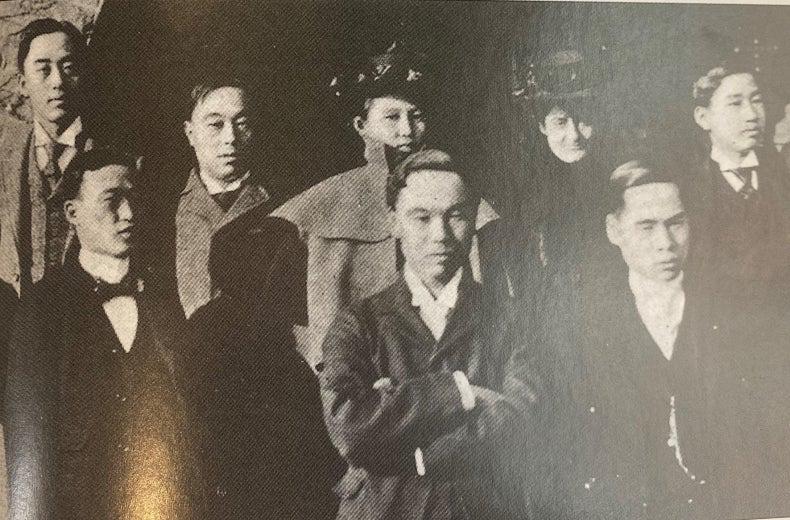
There’s a popular claim that Arirang was recorded in the U.S. in the 1890s. What is documented by the Library of Congress (American Folklife Center) is that early recordings of Korean songs were made in Washington, DC in 1896 by American ethnologist Alice C. Fletcher, capturing Korean students singing what she labeled “Love Song: Ar-ra-rang.” These cylinder recordings are now housed at the Library of Congress.
What Boundary Stones (WETA) adds is that seven Korean students were actually enrolled at Howard University in 1896, and their singing captured attention on campus, suggesting a live musical presence of these students at Howard.
Howard wasn’t necessarily the recording studio for Arirang, but it was part of the same DC world where early Korean students, culture, and music intersected with local university life. During the later Japanese occupation period, Korean students, scholars, and activists again used culture (songs, language, performance) as resistance and proof of identity. Washington, DC was a hub for anti-colonial thinking, and Howard sat in the middle of that broader intellectual ecosystem.
As a Howard alum, that global solidarity lineage matters. As a BTS fan, knowing how deeply Arirang is tied to survival, memory, and resistance makes its continued cultural presence feel especially meaningful. 🫰🏾
More here (Library of Congress): https://guides.loc.gov/korea-folklife



Leave a Comment